
Silverdale City Directory Holdings
Silverdale city directory research begins with a county shelf. Washington State Library, Puget Sound Regional Archives, Allen County Public Library listings, and Kitsap Regional Library each describe a different part of the surviving record. Years are not continuous, and a county volume may omit Silverdale or file it under another heading. Confirm the exact volume before expecting a household entry.
| Collection | Years | Where held | Access |
|---|---|---|---|
| Kitsap County directories | 1882; 1884–85; 1887; selected runs 1909–42 and 1975–84 | Washington State Library | Limited appointment access |
| Polk Kitsap directories | 1914–15; 1919–20; 1922; 1925; 1931; 1938–40; 1948–83 | Puget Sound Regional Archives | Archive inquiry and reproduction |
| Silverdale catalog runs | 1913–14; 1915–16; 1917–18; 1920–21 | Allen County Public Library listing | Confirm shelf or scan access |
| Genealogy microfilm and databases | Varies by record set | Kitsap Regional Library | Branch, request, or in-library use |
| Territorial and state census | 1857, 1860, 1871, 1883, 1885, 1887, 1889 | Digital Archives and Puget Sound branch | Online index or archive copy |
The State Library list is an official holdings inventory, while the Silverdale-specific runs come from an established genealogy catalog rather than an exposed scanned page. That distinction matters. A catalog establishes location and date, but only the volume establishes how a person's name, address, or occupation was printed.
Build a year checklist before contacting a repository. Mark each run as verified holding, requested volume, inspected page, or no Silverdale section found. This keeps a missing search result from being mistaken for a missing book. It also makes later archive requests short and exact.
Kitsap Runs Include Silverdale
Silverdale is not an incorporated city, so many old books treated the community as part of a broader Kitsap or Bremerton-area market. Search the alphabetical name section, the geographic headings, and any rural-route pages. Try Silverdale, Old Town, nearby postal names, and county labels. A modern Silverdale mailing address should not be forced onto a historical entry.
The Washington State Library county-directory inventory provides the verified Kitsap years. Its current notice says the library closed because of funding effective July 1, 2025, with limited Thursday appointment access listed from 1:00 to 4:00 p.m. Contact askalibrarian@sos.wa.gov before planning research.
The inventory screen shows how the official year list is presented.
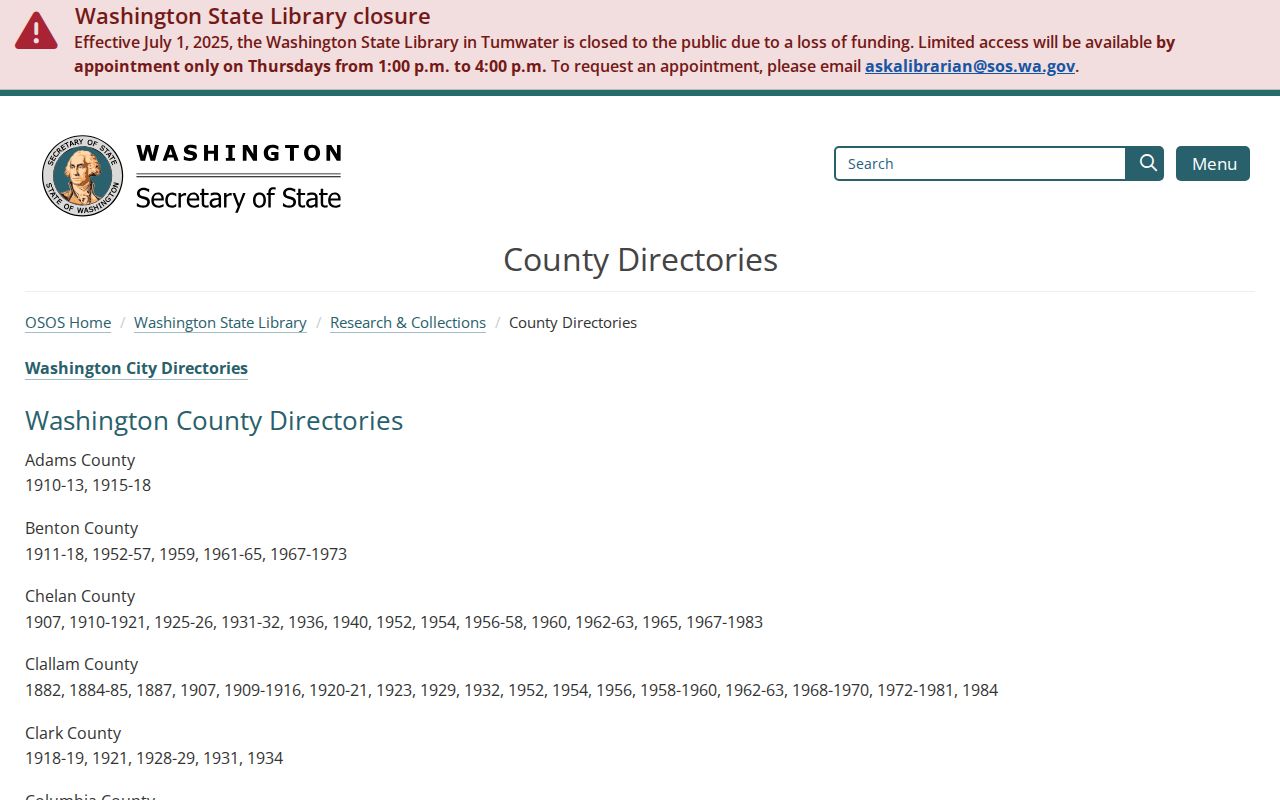
The screenshot is a shelf guide, not a scanned Silverdale city directory entry, so request the cited volume and page before transcribing a person.
Note: A listed Kitsap volume does not guarantee that every Silverdale household was canvassed.
Read Silverdale Directory Entries Carefully
No stable public scan of an individual Silverdale entry was verified in the research. That gap rules out claims about a specific book's symbols. Once a page is obtained, photograph its title page and abbreviation key first, then transcribe only the fields actually printed.
| Name | Keep initials, spelling, and order exactly as printed. |
|---|---|
| Relative | Record a spouse or other parenthetical name only if present. |
| Work | Separate occupation from an employer or business name. |
| Address | Copy the house number, street, rural route, and place label. |
| Marks | Decode owner, renter, widow, boarder, or cross-reference marks from that volume's key. |
| Citation | Save publisher, title, year, page, repository, and image details. |
- Criss-cross directory
- A later directory section arranged by street and house number, useful when the address is known first.
- Householder index
- An address-led list of the person identified as the household head.
- Abbreviation key
- The volume's own legend for shortened words and status marks.
Never expand an initial or decode a symbol from memory. Publishers changed conventions, and a rural community could be arranged differently from an urban street grid. Store a normalized spelling as a separate search aid while preserving the source text.
Use Silverdale City Directory Help
Kitsap Regional Library genealogy services connect researchers with the Sylvan Way Genealogy Center and Puget Sound Genealogical Society collection. The service includes Kitsap obituary requests, microfilm, FamilySearch, Fold3, and Ancestry Library Edition at KRL locations. The Silverdale branch can refer a question even when the needed film or specialist sits at Sylvan Way.
Ask for the precise city directory year, call number, format, and location. Find out whether it is print, microfilm, fiche, or a licensed database. If no directory survives for the year, ask about local newspapers, a death index, school yearbooks, marriage records, or cemetery files. The catalog itself exposes query, search-type, title, date-range, format, location, and call-number details for many microform items.
The KRL genealogy page presents the local research channels available around Silverdale.
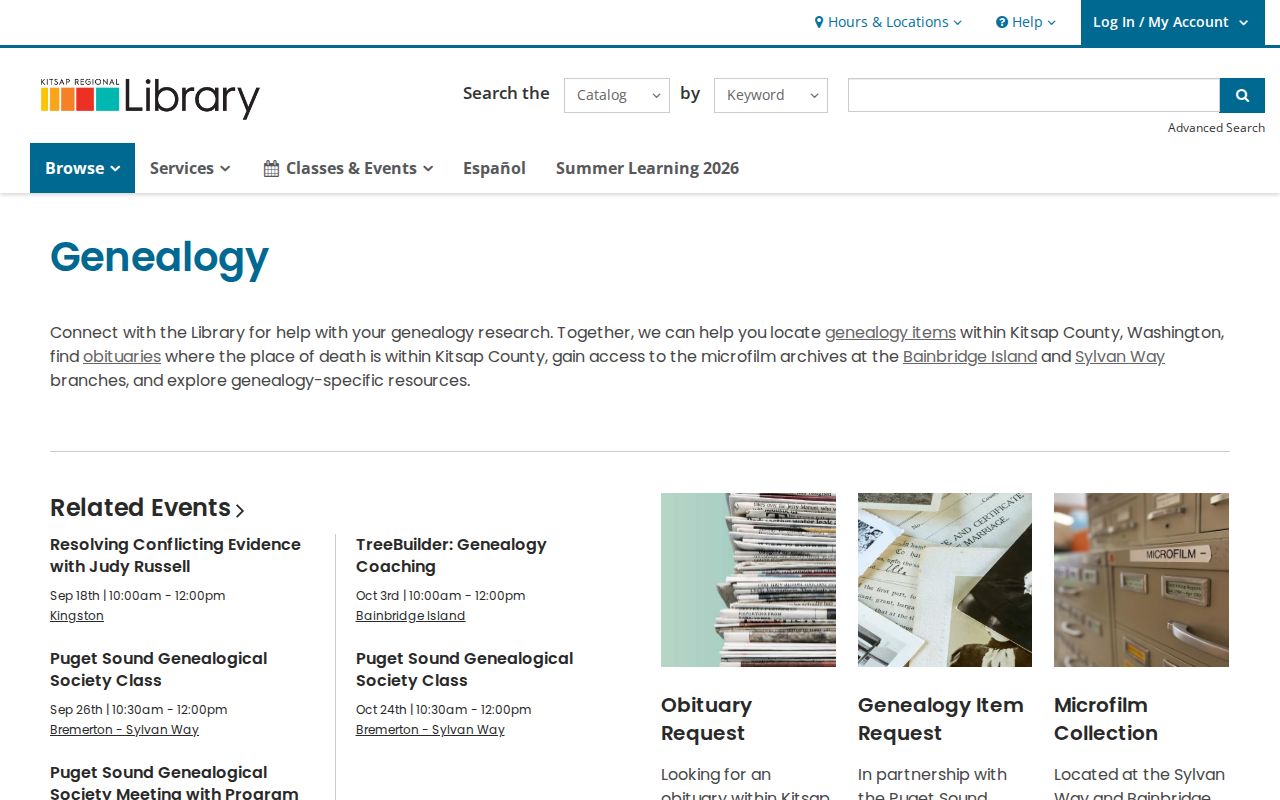
The service list is especially useful when a directory gap must be tested against an obituary, census, or yearbook.
The KRL microfilm catalog search is the next source for confirming a format, branch, and call number.
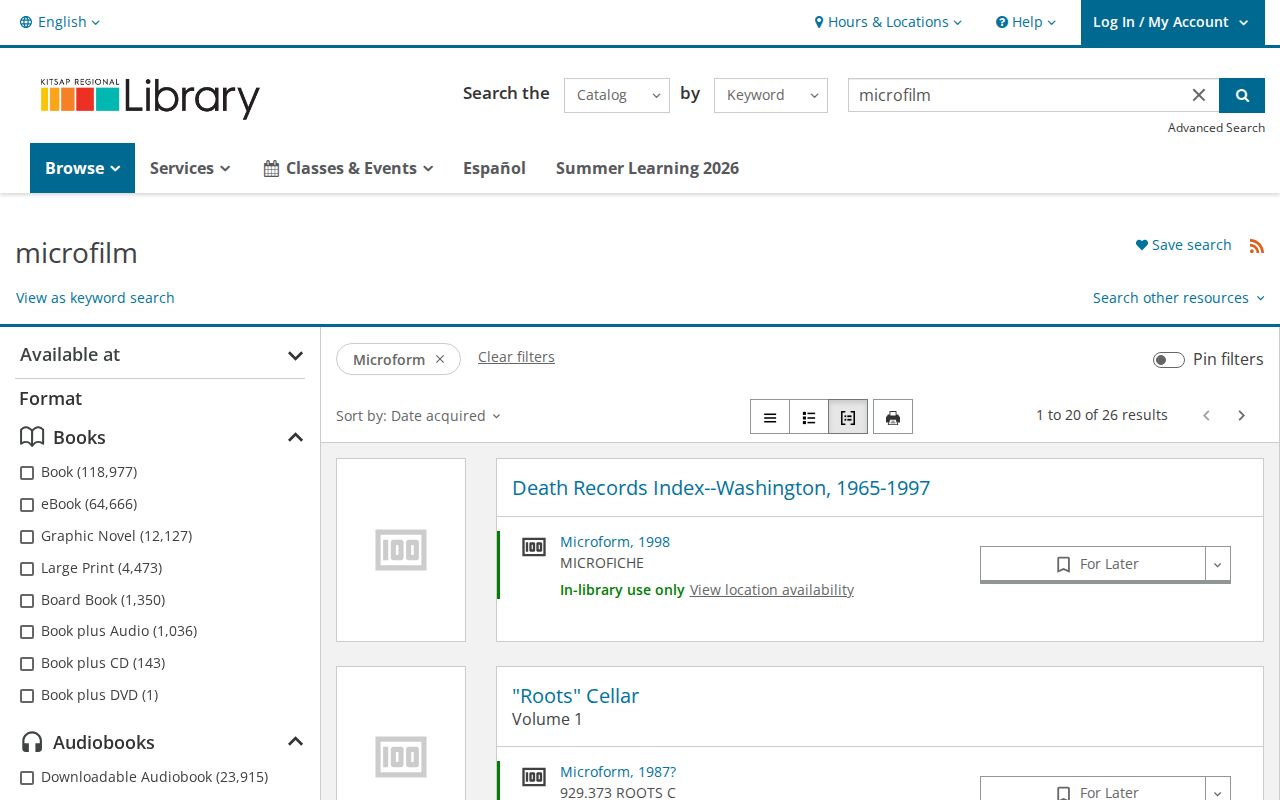
The catalog view helps turn a broad genealogy request into a request for one film or indexed record set.
Trace Silverdale Families by Year
A city directory can place a name at an address between census years. It should remain separate from the census, which may add age, birthplace, citizenship, and household relationships. The best family-history trail compares both without blending their dates or geographic rules.
- Find the closest directory year and note its publication date, publisher, repository, and exact place heading.
- Search the surname, street, rural route, and nearby headings, then inspect all people at the same address.
- Move one available year at a time and record each change in spelling, address, work, or household notation.
- Pair the result with the nearest released federal or Kitsap territorial census, keeping each source date distinct.
- Use deeds, probate, obituaries, newspapers, and yearbooks to explain a move or disappearance.
A missing name proves only that the name was not found in that search. The person may have moved, died, declined listing, used initials, lived outside the canvassed area, or appeared under a neighboring place. Search forward and backward before drawing a conclusion.
When the address changes, compare the parcel's legal description and the county Address History Report rather than assuming the family moved. Street names, directionals, house numbers, and postal labels can change while a parcel remains in place. Preserve both the old and current form.
Open Silverdale Archive Collections
The Puget Sound Regional Archives holds far more than Polk directories. Kitsap census, voter, court, probate, marriage, assessment, property-card, recording, school, teacher, military, medical, and dental series can fill a directory gap. Some holdings are microfilm or indexes rather than complete digital images.
Contact the branch at 425-564-3940 or psbrancharchives@sos.wa.gov. Give the surname, variants, approximate years, Silverdale or older place labels, and the record series sought. Ask about image quality and reproduction. Territorial court and probate material may survive on poor microfilm, so compare it with an index and mark uncertain text.
The Washington Digital Archives search lets a researcher choose record series, county, and title before entering a value.
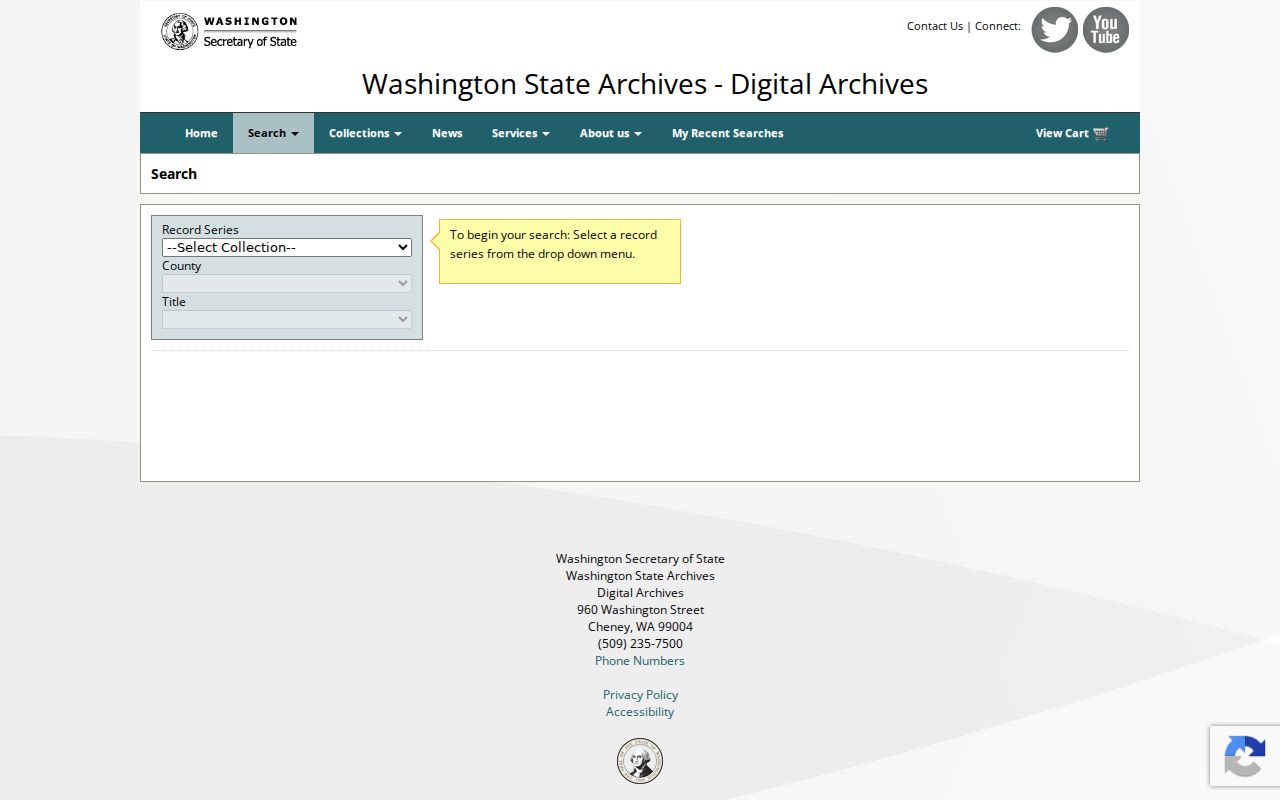
The county and series controls help find Kitsap material created before “Silverdale” became a reliable catalog term.
The Puget Sound Regional Branch page identifies the archive that holds many pre-digital Kitsap series.
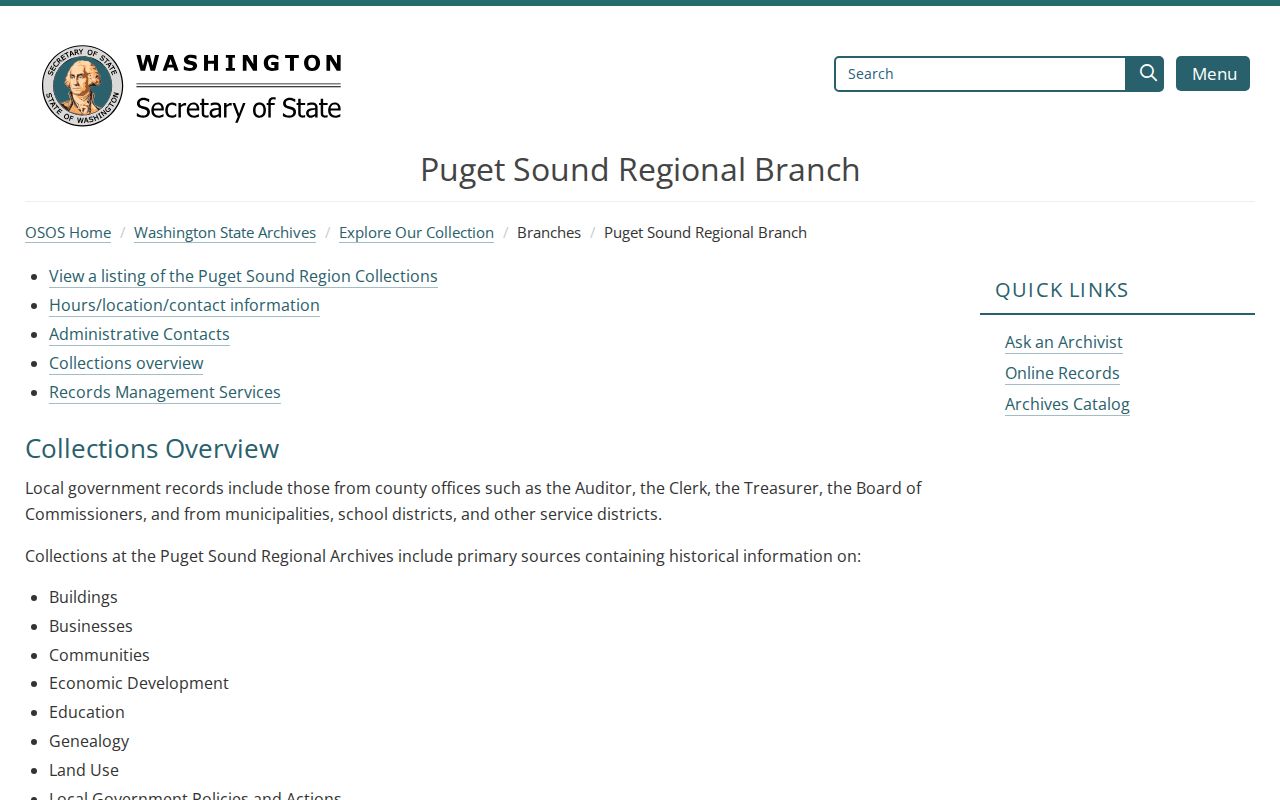
The branch description connects the catalog trail with staff-assisted access to the original series or microfilm.
Pair Silverdale Directories With Census
Washington Digital Archives describes 170 records in the 1857 Kitsap County census collection. Its indexed fields include household member names, age, birthplace, occupation, citizenship, and remarks. That early schedule can separate people with the same name long before modern Silverdale street addresses. Search Kitsap and the older Slaughter County label as well as nearby settlements.
Federal census records are released after 72 years. A census captures a household on its enumeration date, while a city directory may reflect canvassing from a somewhat different time. Cite both dates. If a person appears in one but not the other, test initials, misspellings, military or maritime movement, county geography, and neighboring postal names before deciding the records conflict.
Broaden Silverdale Directory Research
Newspapers, obituaries, cemetery records, school yearbooks, and museum collections add relationships and context that a city directory may omit. KRL takes obituary requests for Kitsap County deaths. An established Silverdale genealogy guide lists the Silverdale Breeze from 1945–1967 and Central Kitsap Reporter from 1999–2016, though exact access and completeness must be checked with the repository.
The Kitsap History Museum collection describes more than 40,000 artifacts and textiles, more than 100,000 photographs and images, and a broad archive. State inventory material also identifies Silverdale library scrapbooks from the 1920s onward and a small Women of Woodcraft record group from 1902–1910. These are rare people-and-place trails when a directory shelf is thin.
The museum collection page shows the scope of material that can put a directory name into local context.
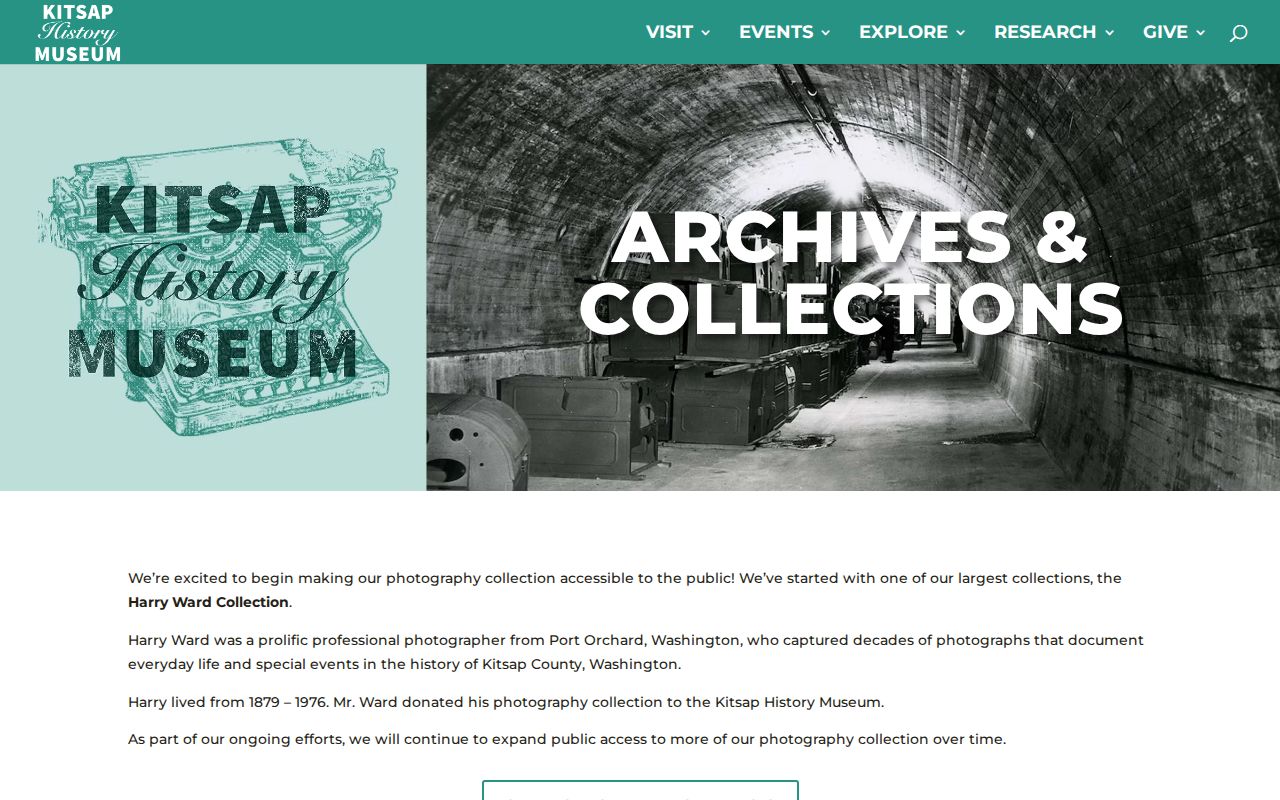
A photograph or scrapbook should be cited by collection and item; it does not prove residence without a matching dated record.
Scan Silverdale Directory Evidence
KRL launched Scan EZ stations at Silverdale, Bainbridge, Poulsbo, and Sylvan Way in 2025. The stations can save or restore family photos and archival articles, create JPG and PDF files, recognize text, translate, convert text to audio, and make high-resolution card scans. This local service helps preserve a borrowed clipping or family copy without stripping away its context.
Capture the title page, abbreviation key, full directory page, and any facing-page continuation. Name files with the year, repository, volume, and page. Keep an untouched master scan, then make a separate transcription or enhanced copy. A careful scan supports later checking when street names, initials, or worn type are hard to read.
For a family copy, add a short source note while details are fresh: who supplied it, when it was scanned, and whether it came from an original book, printout, or later photocopy. Provenance helps distinguish strong evidence from an undated clipping.
Note: Ask each repository about photography, handling, and reproduction rules before scanning its material.